Room study 01 / Water, light, touch
Stone Around the Ritual
The most convincing stone bathrooms begin with ordinary movements: reaching for a towel, setting down a glass and stepping across a wet threshold.
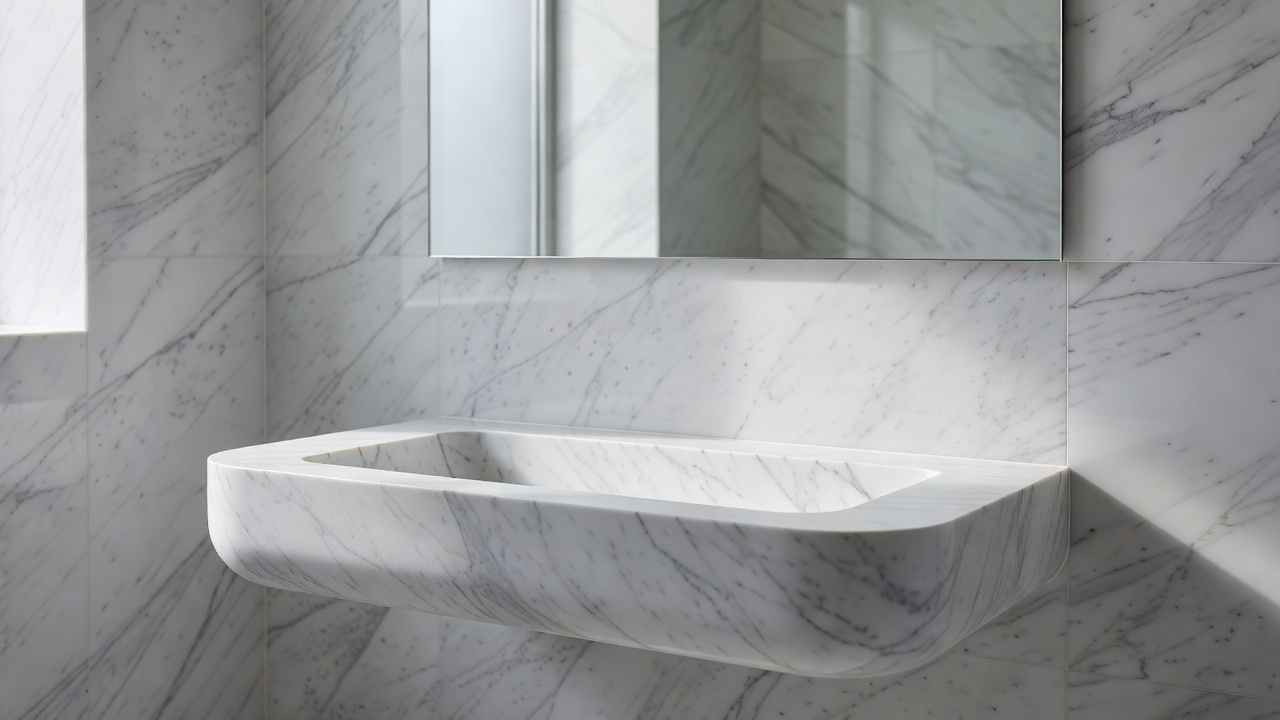
Start within reach
The edge is the first encounter
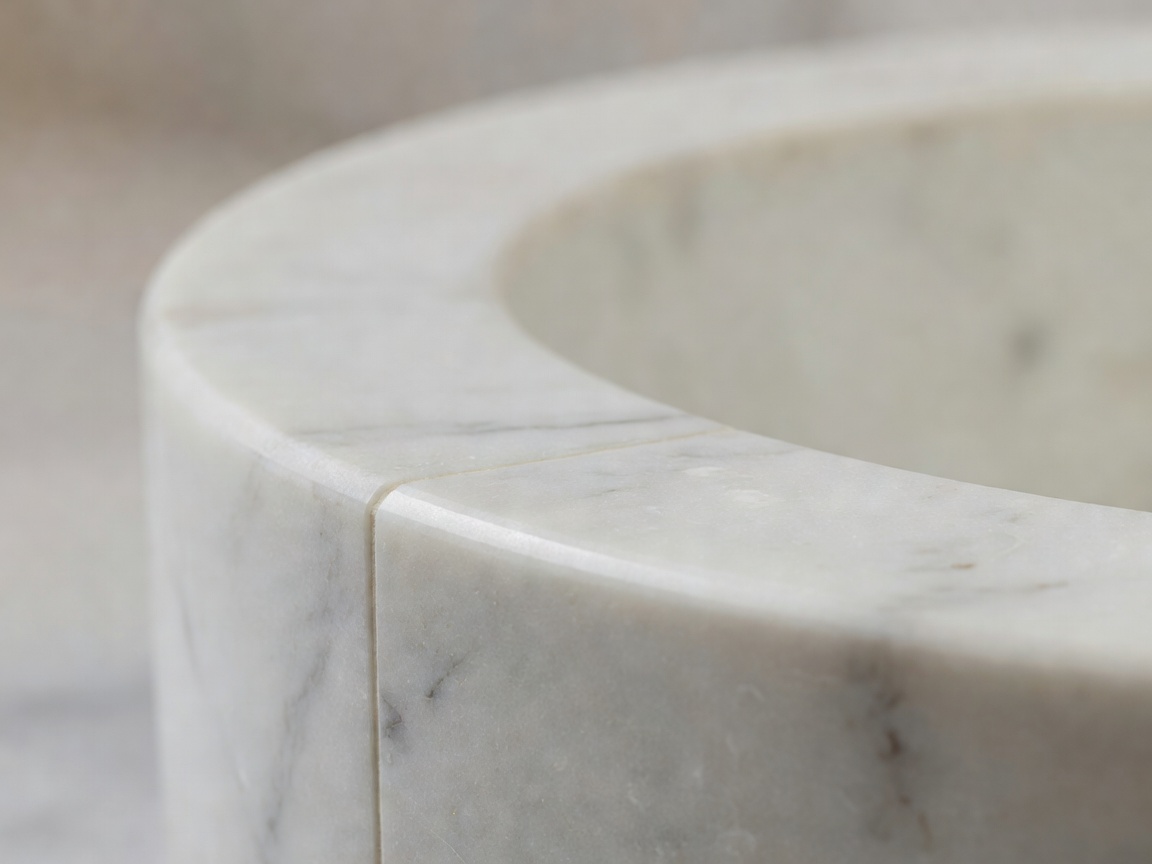
A basin rim concentrates many of a bathroom’s decisions in a few centimetres. The stone must meet the bowl, accommodate the tap and leave a place for water to land without turning every movement into a cleaning exercise. A deep-looking apron can lend visual weight; a modest edge may feel quieter against a textured wall.
Neither appearance tells you how the assembly works. Ask for a section drawing showing the actual stone thickness, any built-up edge, the supporting structure and the connection to the basin. A monolithic-looking object may be fabricated from several pieces. That is not a flaw, but its seams deserve to be planned rather than discovered on installation day.
Consider the hand as carefully as the eye. Very sharp arrises can be vulnerable to damage and uncomfortable at a frequently touched corner. The fabricator should recommend a suitable edge treatment for the material, its thickness and its exposure. A sample makes this discussion more useful than a profile name alone.
Read the light
Choose a finish, not a promise
Polished marble returns light in a concentrated reflection. Honed marble diffuses it, often making the same pattern feel softer and more continuous. Neither finish is a universal answer to water, wear or slipping. Performance depends on the stone, treatment, surface texture, contamination, drainage and use.
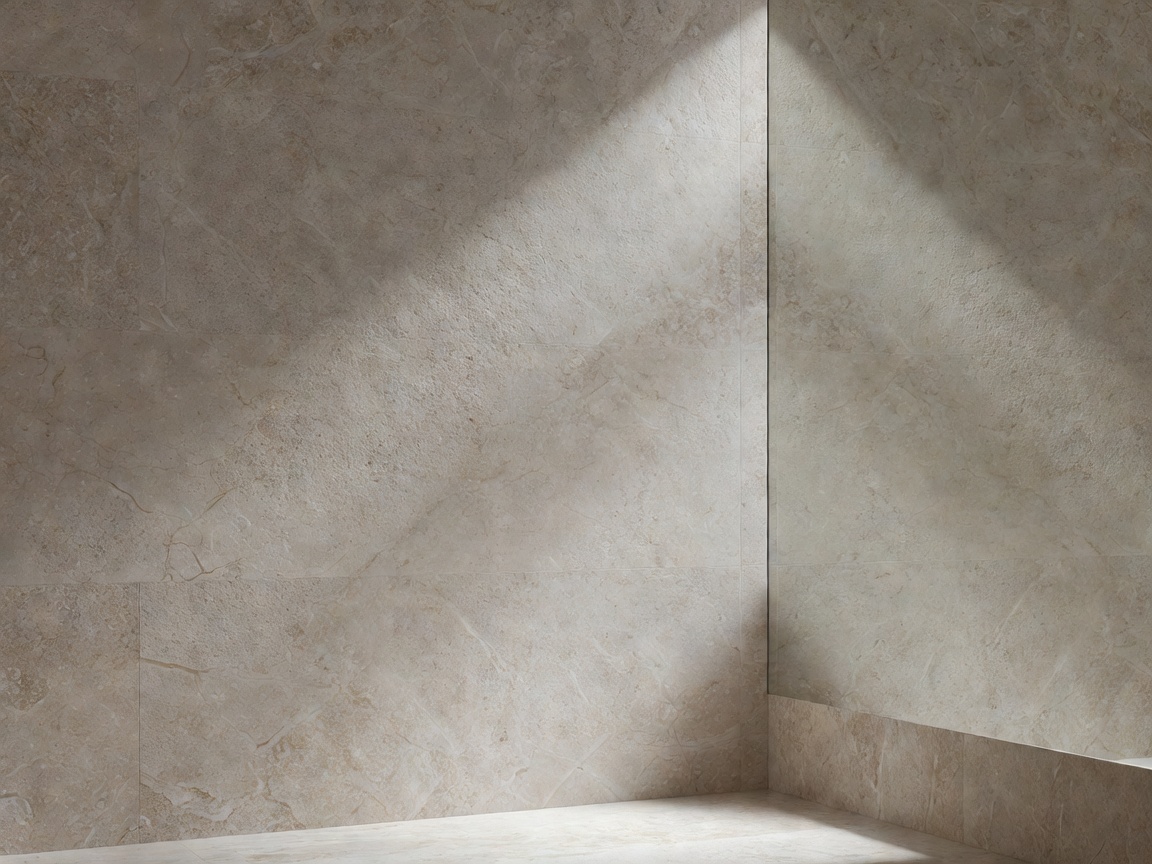
View a physical sample under the lighting planned for the room. Light grazing along a wall can reveal small surface variations; broad frontal light may flatten them. At a mirror, a brilliant slab can become a secondary light source or an unwanted reflection. Test that relationship at roughly the intended viewing angle.
For floors, request relevant slip-test information and local professional guidance for the wet condition in question. A honed finish is not automatically a safe shower floor. Small-format pieces introduce more grout joints, but the complete assembly still needs an appropriate specification, drainage design and maintenance regime.
Water belongs in the construction drawings
Stone and grout are not substitutes for a designed waterproofing system. A shower needs a compatible substrate, waterproofing, carefully treated penetrations and drainage suited to the chosen assembly. A visually continuous wall-to-floor junction still needs the correct movement provision. Do not ask an installer to eliminate a necessary joint simply because a photograph appears seamless.
Thresholds deserve particular attention. A raised strip may help express the change of room, yet it can create an access problem. A flush-looking transition may require changes beneath the visible finish to manage water and floor levels. Applicable accessibility rules, local building requirements and the existing structure must be considered together. The U.S. Access Board’s guidance is a useful reference where ADA provisions apply; it is not a worldwide residential specification.
Allow the material an honest life
Marble is sensitive to acidic substances. Some cosmetics and bathroom cleaners can alter its surface, leaving an etched mark rather than a stain. An impregnating sealer may reduce absorption, but it does not make a calcite-rich stone acid-proof. Choose stone-safe products recommended for the actual material and test unfamiliar treatments in an inconspicuous area.
If that evolving surface would be frustrating, compare other stones or suitable manufactured alternatives rather than treating maintenance as a moral commitment. A beautiful bathroom is also one its occupants can use comfortably. Ask who will clean it, which products they already use and whether the proposed routine is realistic.
Three questions before approval
- Where does water remain?Review ledges, tap bases, niches and the basin-to-counter joint.
- What happens behind the stone?Request the waterproofing, support and movement-joint details.
- What will it look like after use?Discuss etching, sealing, cleaning and realistic repair options.