Room study 04 / Keep, edit, resolve
A Room Reconsidered
Before ordering a new slab, ask what is actually wrong. A room may need a clearer hierarchy, a better junction or a repaired surface rather than complete replacement.
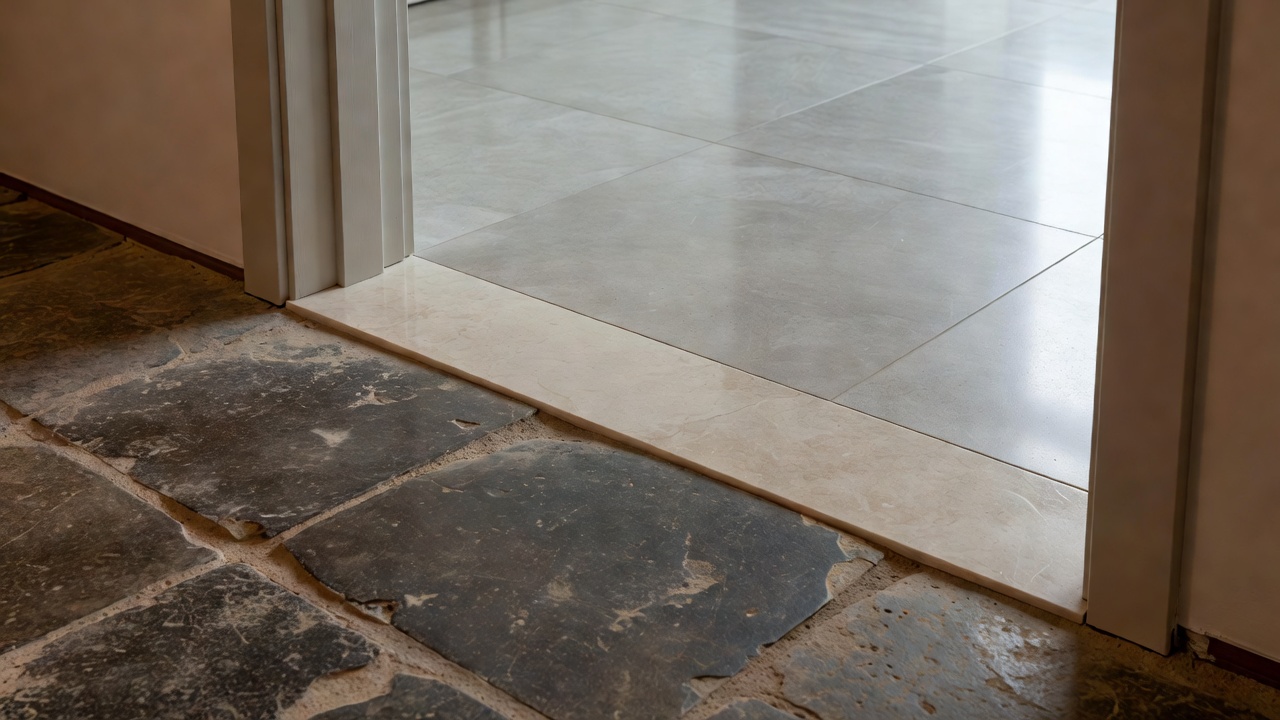
01 / Observe before changing
Separate wear from disorder
A surface can look tired because it is damaged, because it is lit unkindly or because everything around it competes for attention. Those are different problems. Record the room at several times of day and describe the discomfort precisely: glare at the mirror, a dark preparation area, an awkward threshold or a pattern interrupted by too many fittings.
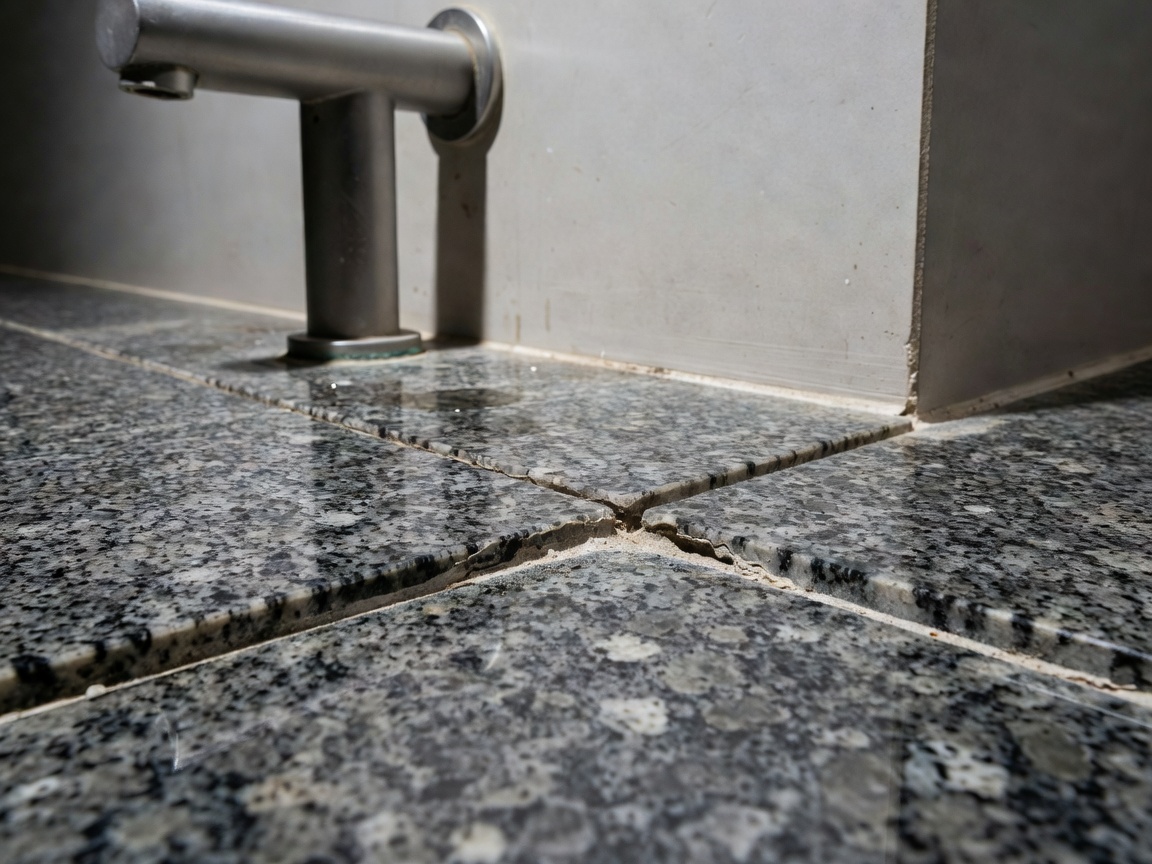
Make a separate record of physical defects. A crack, loose tile, persistent damp patch or failed joint may indicate a problem below the finish. Covering it with a new material does not establish that it has been resolved. Arrange an appropriate survey before treating a construction issue as a cosmetic one.
Then identify what already works. Sound stone, useful cabinetry and a good arrangement of services may deserve to stay. Retention is not automatically simpler or cheaper, but it gives the design a more accurate starting point than the assumption that transformation requires demolition.
A conceptual comparison
The same footprint, a different reading
These diagrams illustrate a design principle, not a completed client project. They show visual hierarchy only; they are not construction drawings or proof of improved performance.
02 / Edit the visual field
Change what the eye meets first
A room’s apparent complexity is not just a function of its size. Abrupt material changes, misaligned joints and several competing focal points can make a generous space feel unresolved. Start at the entrance and trace the first view. Decide which surface should lead and which elements should recede.
Sometimes a quieter wall finish is enough to let existing stone make sense. Sometimes changing the position or character of a light reduces an unwanted reflection. A single carefully resolved backsplash may be more effective than extending stone indiscriminately across the room. Test these ideas with samples and temporary lighting before committing to irreversible work.
Do not confuse visual continuity with eliminating every joint. Movement provisions, access panels and serviceable connections can be composed rather than concealed. A slim, deliberate reveal often looks more convincing than a rigid junction that later cracks.
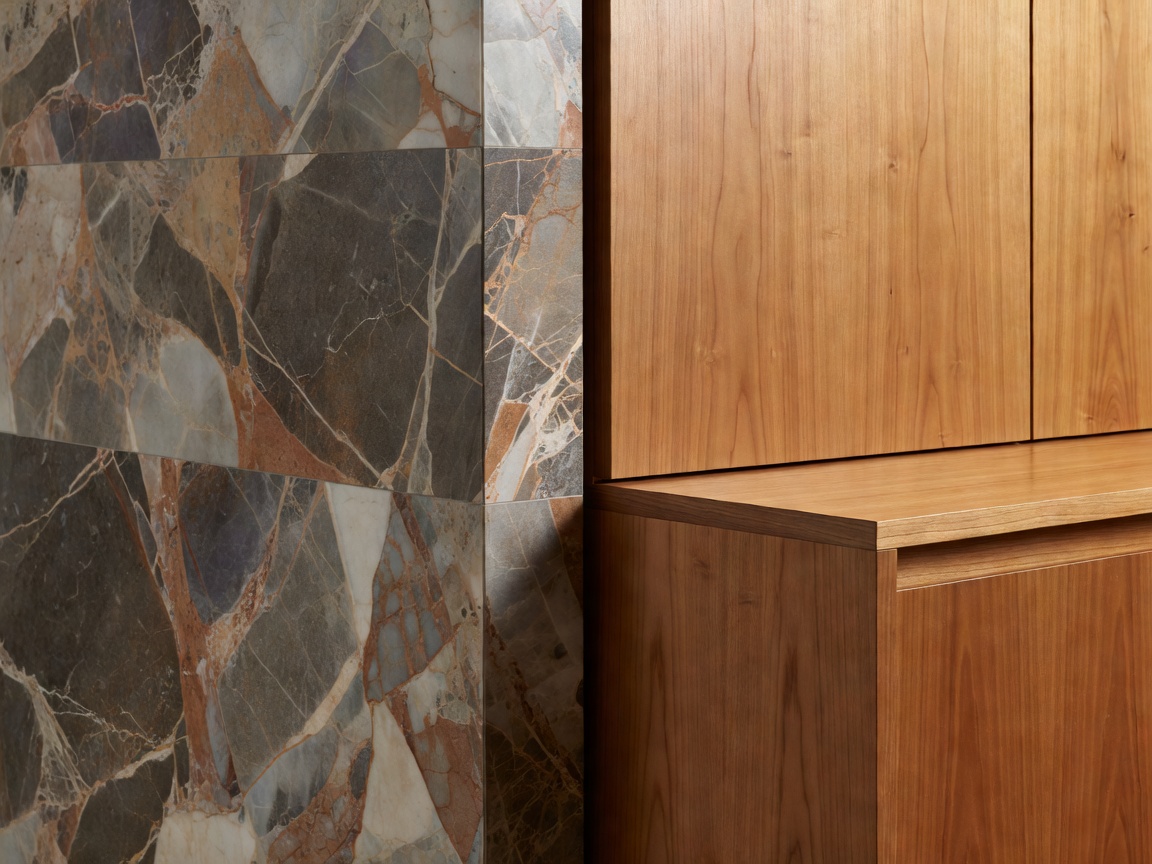
Restoration is an option to investigate
Some scratches, dull areas and etched marks can be improved by a skilled stone-restoration specialist. The appropriate treatment depends on the material, finish, previous products and depth of damage. A trial area is important: restoring only one patch may leave an obvious change in sheen, while treating the whole surface may have implications for adjacent fittings.
Ask for a diagnosis before agreeing to a method. A topical coating, an impregnating treatment and mechanical refinishing do different things. None should be sold as a universal cure. Clarify the expected appearance, ongoing maintenance and any limitations in writing. Deep cracks, movement or moisture-related failures may need other expertise first.
Build the brief around decisions, not adjectives
“Calmer,” “lighter” and “more sculptural” are useful ambitions, but they become actionable only when translated into specific changes. Name the surface to retain, the reflection to soften, the joint to align and the working route to improve. Include the existing room measurements and the constraints that cannot be assumed away.
Request an itemised scope covering investigation, protection, removal, substrate work, material, fabrication, installation and making good. Ask who is responsible for final measurement and slab approval. Costs and timelines vary too widely for a generic transformation story to function as a quotation. Keep an allowance for conditions that cannot be confirmed until the room is opened up.
Judge the outcome in use
Photograph the result from the same position and under comparable lighting if you want a meaningful before-and-after record. More importantly, return to the initial problems. Is the preparation area easier to see? Does the threshold work for the people who use it? Is cleaning more straightforward? A transformation succeeds when the changed details support daily life, not merely a single camera angle.